Guide
What Is the Proper Desk Height, and How to Fix a Desk That's Wrong
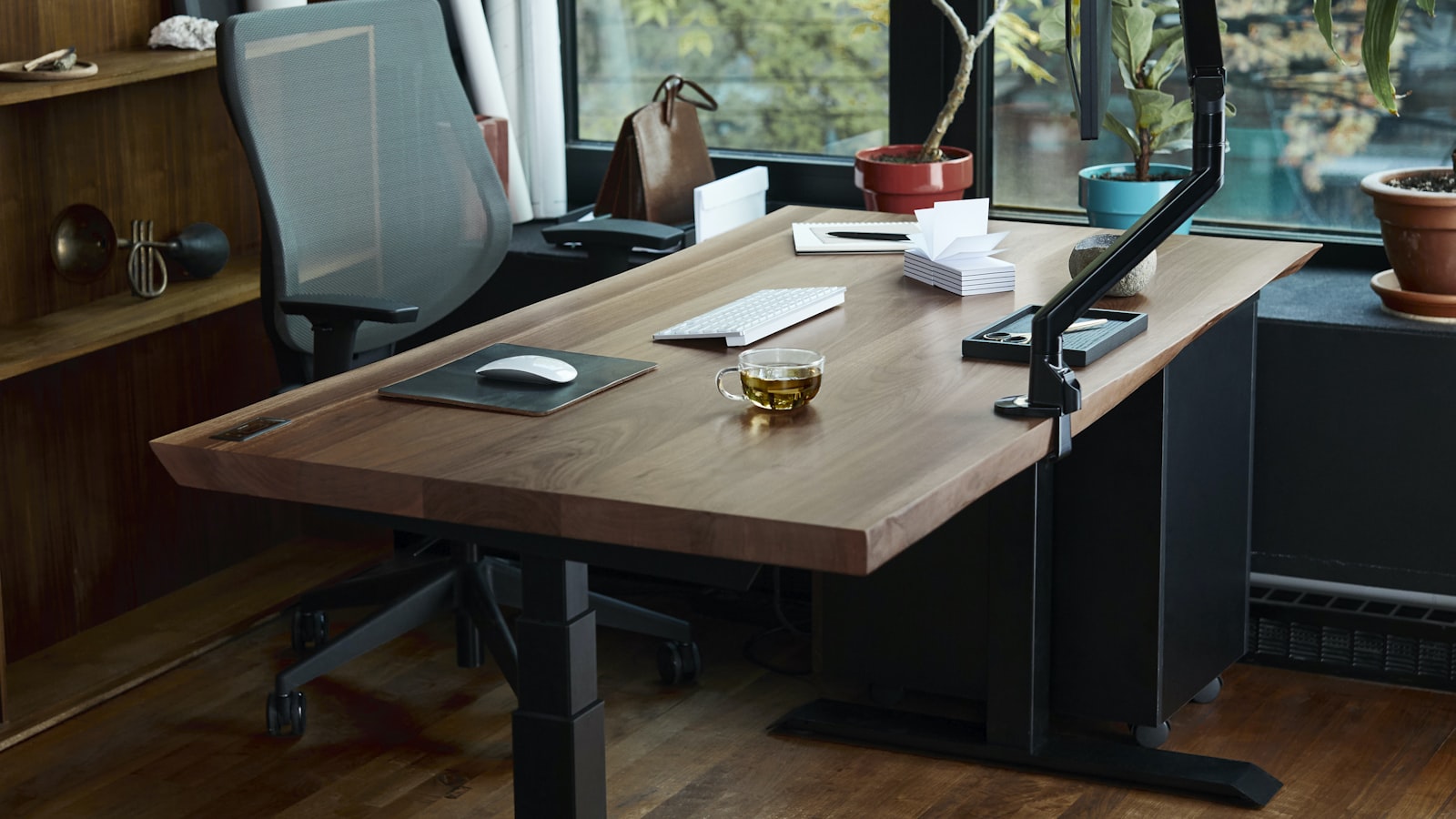
Your shoulders creep up while you type. Your wrists bend back over the keyboard, or your elbows drift out away from your ribs. You’ve adjusted the chair twice and it helped for a day. The chair probably isn’t the problem. The desk is, and almost nobody checks it, because a desk arrives at one height and quietly presents that height as correct.
The standard number is 29 inches, and it’s arbitrary
Most fixed-height desks sold today measure between 28 and 30 inches from floor to work surface, clustering hard around 29. That figure comes from mid-century office furniture standards built around an average male office worker, and it stuck because manufacturing a single height is cheaper than manufacturing five.
It fits people around 5 feet 10 inches reasonably well. Everyone else is negotiating with a number that was never about them.
The number that matters is your seated elbow height
Forget the desk for a moment and measure yourself instead. Sit in your chair with your feet flat, thighs roughly parallel to the floor, and let your upper arms hang straight down. Bend your elbows to about 90 degrees.
The height from the floor to the underside of your elbow is your target work surface height. Not your desk’s height. Yours.
A rough guide by standing height:
| Your height | Approximate seated elbow height |
|---|---|
| 5 ft 2 in | 24 to 25 in |
| 5 ft 6 in | 25 to 26 in |
| 5 ft 10 in | 27 to 28 in |
| 6 ft 2 in | 29 to 30 in |
Look at where 29 inches falls on that table. If you’re under about 5 feet 10, a standard desk is too tall for you, and it’s too tall for most people who own one.
Measure it in two minutes
Sit properly first, because measuring in a slouch gives you a number for the slouch. Feet flat on the floor or on a footrest, back against the chair, shoulders down.
Have someone measure from the floor to the bottom of your bent elbow. If you’re alone, mark the wall next to you at elbow height with a sticky note, then measure the note. Compare that to your desk. A gap of more than an inch in either direction is worth fixing.
If your desk is too tall, lower yourself into it
This is the common case, and the honest answer is that you usually can’t cut the desk down. You raise the chair instead until your elbows meet the surface, and then deal with the consequence: your feet no longer reach the floor.
That’s what a footrest is for, and it’s why footrests are so often sold to people who think they have a leg problem. They have a desk problem. A keyboard tray is the other route, since it moves the typing surface two or three inches below the desktop without touching the desk at all.
If your desk is too low, raise the desk
Less common, but easier. A desk that’s an inch or two short can be lifted at the legs rather than replaced.
Stackable furniture risers handle this in the 1.5 to 5 inch range, and the adjustable kind let you stack to the exact lift you measured instead of guessing. Two things to check before ordering. Confirm the load rating covers a loaded desk, not just the desktop, and confirm the cradle actually fits your leg profile, since square risers and round legs don’t always sit together well.
Check the desk for wobble afterward. Raising a desk raises its center of gravity, and a desk that was slightly loose at 28 inches will be noticeably loose at 31.
Standing height is a different measurement
If you have a sit-stand desk, the standing position needs its own number, and it isn’t the seated one plus a fixed amount. Stand naturally, drop your arms, bend your elbows to 90 degrees, and measure again. For most people that lands somewhere between 38 and 45 inches.
Set both positions once and save them to the desk’s presets if it has them. Guessing at the button every morning is how people end up standing at the wrong height for months.
Where a themed desk makes this harder
A desk mat adds a few millimeters, which is nothing. A monitor riser with a keyboard shelf underneath, a thick wrist rest, or a mechanical keyboard with a tall case are not nothing, and they stack.
A high-profile mechanical keyboard can sit an inch above the desk surface at the home row. That effectively converts a correct desk into a tall one. If you’ve built a setup around a chunky board and your wrists are complaining, measure the top of the keys rather than the desktop. That’s the surface your hands actually work at.