Guide
How to Choose an Under Desk Heater
Cold feet under a desk in an air-conditioned office rarely get fixed by turning up the thermostat for the whole room, since the vents are often far from the desk and adjusting them affects everyone else nearby. A small heater placed directly under the desk solves that by warming just the space around the feet and legs, without touching the room’s main heating. Picking one comes down to wattage, heating style, and how it shuts itself off if something goes wrong.
Wattage decides whether it trips a shared office circuit
A personal heater rated under 500 watts draws little enough current that it rarely competes with whatever else is already plugged into an office circuit. A larger 1,500-watt unit heats a space faster but pulls close to the limit of a standard 15-amp circuit on its own, especially if a computer, monitor, and desk lamp already share the same outlet. Checking the heater’s wattage against what else is plugged into that circuit avoids a breaker trip on a cold morning.
Panel and fan styles heat differently under a desk
A panel-style heater radiates warmth from a flat surface without a fan, which keeps it quiet but means the warmth stays closer to whatever sits directly in front of it. A ceramic fan heater pushes warm air out into the space around the feet faster, at the cost of some fan noise in a quiet room. Someone working somewhere noise matters usually leans toward a panel style, while a fully enclosed desk favors the faster spread from a fan.
Automatic overheat shutoff matters more than a manual switch
A listing should name overheat protection outright rather than bundling it into a vague line about safety. A Lasko 9-inch ceramic heater lists overheat protection and a cool-touch housing, along with two heat settings and a fan-only mode. It runs at 1,500 watts, so the circuit check above applies to it in full.
A few things worth checking before buying one
- Whether the heater lists both tip-over and overheat shutoff, not just one of the two
- The circuit’s other loads if the heater draws close to 1,500 watts
- A free wall outlet within reach, since the heater shouldn’t go through a power strip
- Whether the head tilts or angles, since a fixed flat unit is harder to aim at the feet
Plug it into the wall, not a power strip
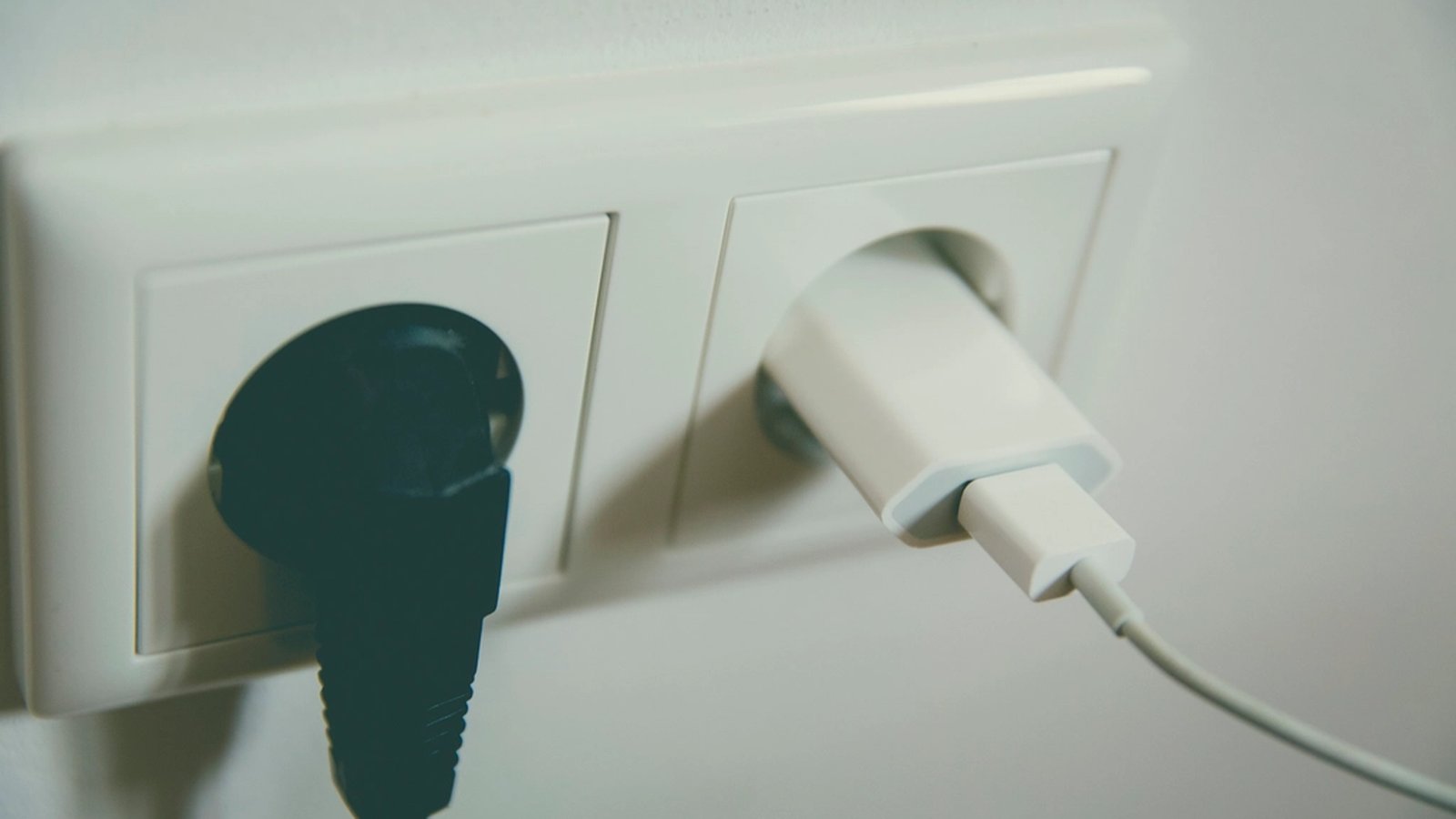
Most heater makers tell buyers to plug the unit straight into a wall outlet and not into a power strip or an extension cord. A heater draws a steady, heavy load for hours, and a strip built for a monitor and a phone charger can overheat under it. That rules out sharing the heater’s plug with the power strip that runs the rest of the setup. Route the heater’s own cord along a clear path to the wall, where it won’t get kicked or pinned under a chair wheel.
Placement near the feet works better than heating open floor
A heater aimed across the open floor under a desk spends most of its output warming air that drifts away before it reaches anyone. Angling it directly at the feet and lower legs, with only a foot or two of open space in between, makes better use of the same wattage. A heater with an adjustable head or tilt makes that aiming easier than a fixed unit sitting flat on the floor.
Matching the wattage to the circuit it shares, and confirming automatic overheat shutoff rather than assuming it, covers the safety side of the decision. Panel or fan style mostly comes down to noise tolerance, and aiming the heater at the feet gets more out of the same wattage than letting it warm open floor space.