Guide
How to Choose a Clamp Lamp for Your Desk
A desk lamp with a heavy round base eats a circle of desk space it never actually uses for light. A clamp lamp skips the base and grips the desk edge instead. That trade only pays off if the clamp’s jaw actually fits the desk it’s meant to grab.
Clamp gap has to clear the desktop’s thickness, not just look big enough
Every clamp lamp lists a maximum opening, usually somewhere between 1.5 and 2.5 inches. That number is the only spec that decides whether the lamp mounts at all. A LEPOWER gooseneck clamp lamp tops out around 2 inches, which covers most desks built from standard 3/4-inch to 1-inch stock. It still leaves headroom for a desk with a thicker edge band or a raised lip. The desktop’s total thickness, not the tabletop material alone, is what has to fit inside that jaw. A decorative edge trim or a mounted cable tray along the same edge can quietly eat into that clearance before the lamp ever gets near it.
Gooseneck reach decides how much of the desk actually gets lit
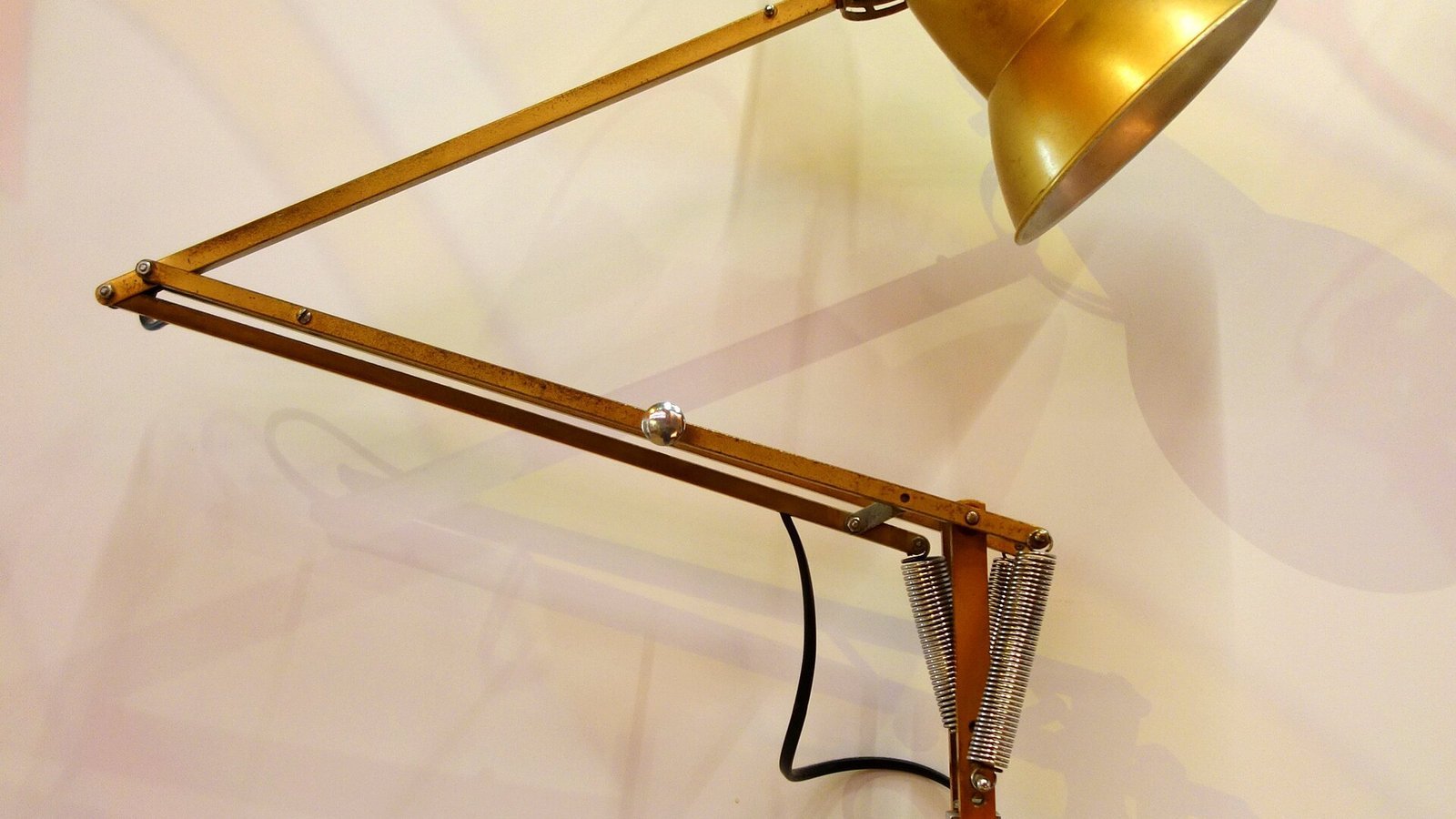
A clamp fixes the lamp to one spot on the desk’s edge, so the arm has to do all the work of getting light to where it’s needed. A short, stiff arm only really lights the few inches directly in front of the clamp. A longer multi-joint gooseneck reaches across a keyboard and monitor stand without repositioning the whole lamp. That means two or three hinged segments rather than one rigid bend. Spring-balanced arms hold an angle without drifting shut under the shade’s own weight. That matters more on a longer reach than a short one, since there’s more arm for gravity to work against.
Glass desktops need a different clamping approach entirely
A clamp designed for wood or laminate edges can crack a glass desktop if it’s tightened the same way. Glass has no give to absorb uneven pressure the way particleboard or MDF does. Clamps rated for glass use a wider, padded contact surface that spreads the grip across more area instead of concentrating it at two points. Tightening by hand until snug matters more here than on any other material, rather than using a wrench or full arm strength. If the desk surface is glass, checking the listing for an explicit glass-safe or non-slip pad callout is worth the extra minute. A lamp not rated for it can slip loose or chip the edge.
A clamp base and a weighted base solve the same problem differently
Some lamps ship with both options. A clamp mounts to an edge, and a separate weighted disc base sets the lamp down anywhere on the desk’s surface instead. The base version is heavier and slower to reposition. It works on desk edges too thick or too thin for any clamp, though, and it doesn’t need access to an edge at all. A wrist rest or other accessory can end up competing for edge space with a clamp lamp. A lamp with the weighted-base option kept in reserve is worth a look on a desk that’s already crowded along its front edge.
Freeing the desktop is the actual point of clamping in the first place
The whole argument for a clamp lamp over a base lamp is desk space. That argument only holds if the clamp attaches somewhere the base lamp’s footprint would have sat. A clamp mounted to the back or side edge, out of the way of the keyboard and mouse, reclaims the exact area a round base would have occupied dead center in front of the monitor. Mounted to the front edge instead, a clamp lamp can end up in the way of an elbow or a keyboard tray extension. That erases the space savings it was bought for in the first place. Once it’s mounted, the light’s color temperature still has to fit the desk’s theme the same way any other bulb would.
Getting a clamp lamp right starts with the jaw and the desk edge it has to grip. A lamp that can’t mount doesn’t get evaluated on anything else. Reach and glass compatibility narrow the field after that, and the base-or-clamp choice decides whether the desk stays as clear as the clamp promised.