Guide
How to Choose a Cord Cover or Cable Raceway
Cords that run visibly along a wall from a monitor to an outlet, or trail across a baseboard from a TV, are hard to ignore once the rest of a room looks put together. A cord cover, also sold as a cable raceway, hides that run inside a channel that mounts flush to the wall or floor. The right one depends less on brand than on width, mounting method, and whether it needs to disappear into the wall color.
Wall-mount and floor raceway solve different visibility problems
A wall-mount raceway runs a cord horizontally or vertically along a wall, typically from an outlet up to a wall-mounted monitor or TV. A floor raceway lies flat against the baseboard or across open floor, built lower and wider to survive foot traffic without catching a shoe. Buying the wall profile for a floor run, or the reverse, usually means a channel that’s either too tall to walk over safely or too shallow to close over the cord.
Width and channel count decide how many cords actually fit
A raceway’s internal width, not its outer dimensions, sets how many cords it can hold before the cover won’t snap shut. A single HDMI and a power cable fit inside a narrow channel, but adding a third or fourth cord usually needs the next size up rather than forcing extra cords into a channel rated for two. Checking a listing’s internal capacity, sometimes stated as a cord diameter total rather than a count, avoids buying a size that closes fine over two cords and gaps open over three.
Adhesive strength has to match the wall surface, not just the cord weight
Most raceway mounts with pre-applied adhesive strips rather than screws, which keeps installation simple but makes the wall surface the limiting factor. Textured wall paint, wallpaper, and unprimed drywall all hold adhesive less reliably than a smooth painted wall does. A raceway light enough to be held by weak adhesive on a smooth wall can still peel off a textured one within days. Testing a short offcut on the actual wall surface before committing the full run catches a bad adhesive match early.
A D-Line half-round cord cover shows what a paintable listing should spell out. It comes in a 39-inch white length with a self-adhesive back and a hinged lid that snaps shut, and the maker says to key the surface with fine sandpaper and apply two coats of paint.
Painting a raceway takes prep the cord itself skips
A raceway advertised as paintable still needs the surface roughened slightly, usually with fine sandpaper, before paint adheres evenly instead of beading up on the factory finish. Skipping that step tends to leave visible brush marks or patches where paint didn’t grip. Matching the wall’s exact paint color, rather than a close approximation, is what makes a painted raceway disappear instead of reading as a slightly off-white stripe under different lighting.
A raceway is different from a tray mounted under the desk
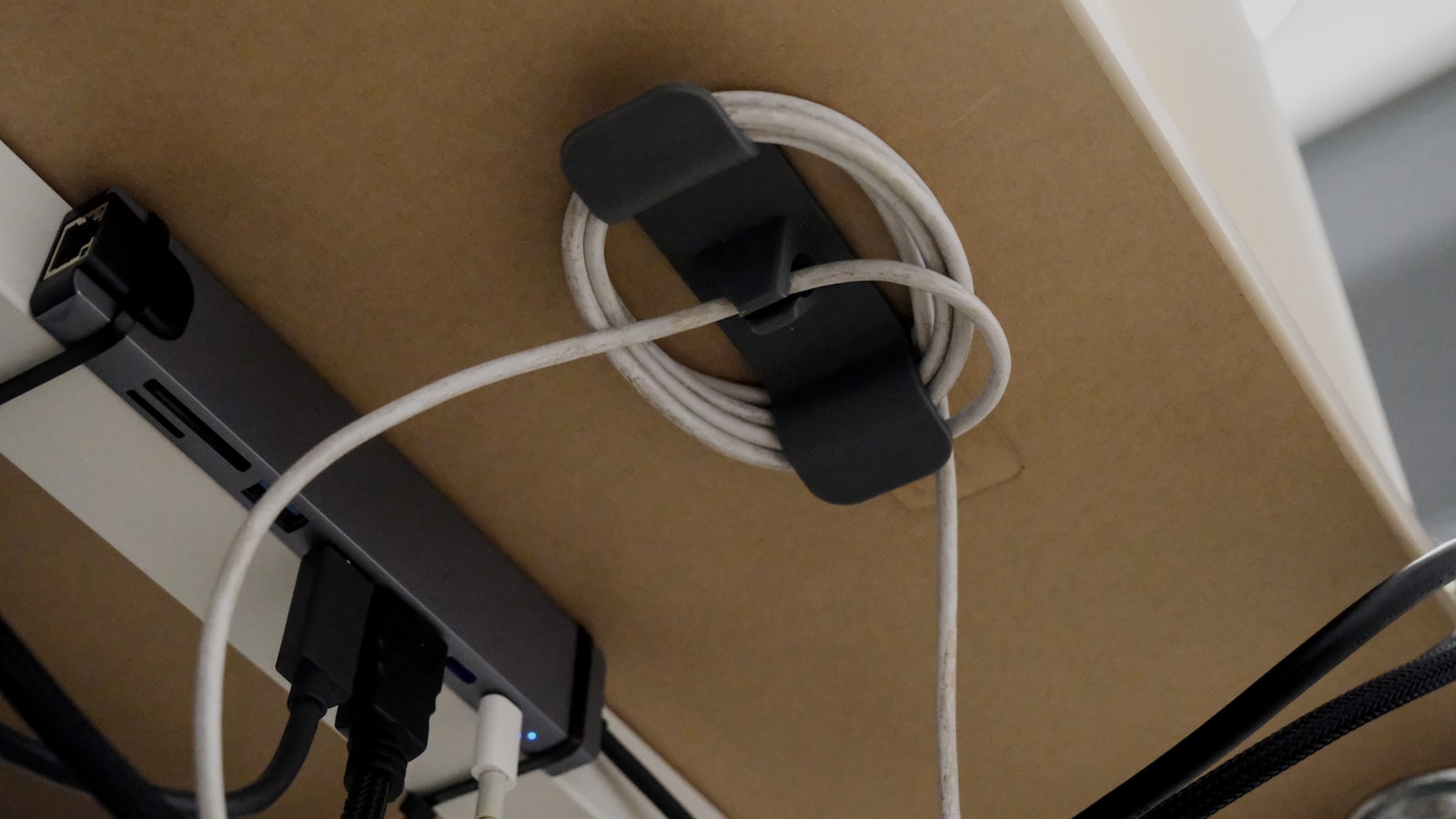
A cord cover runs along a visible wall or floor surface, while an under-desk cable tray holds cords out of sight below the desktop, where a raceway would be pointless. The two solve different halves of the same problem. A tray keeps cords from dangling under the desk, and a raceway hides the stretch after they leave the desk area and cross open wall or floor. The general steps for routing and organizing cords apply either way, while a raceway is one specific product for one specific stretch of visible cord.
Matching the raceway’s mounting style to the wall or floor it’s covering, and sizing the channel to the actual cord count, prevents most fit problems. Paintability only pays off once the surface is prepped and matched to the exact wall color.